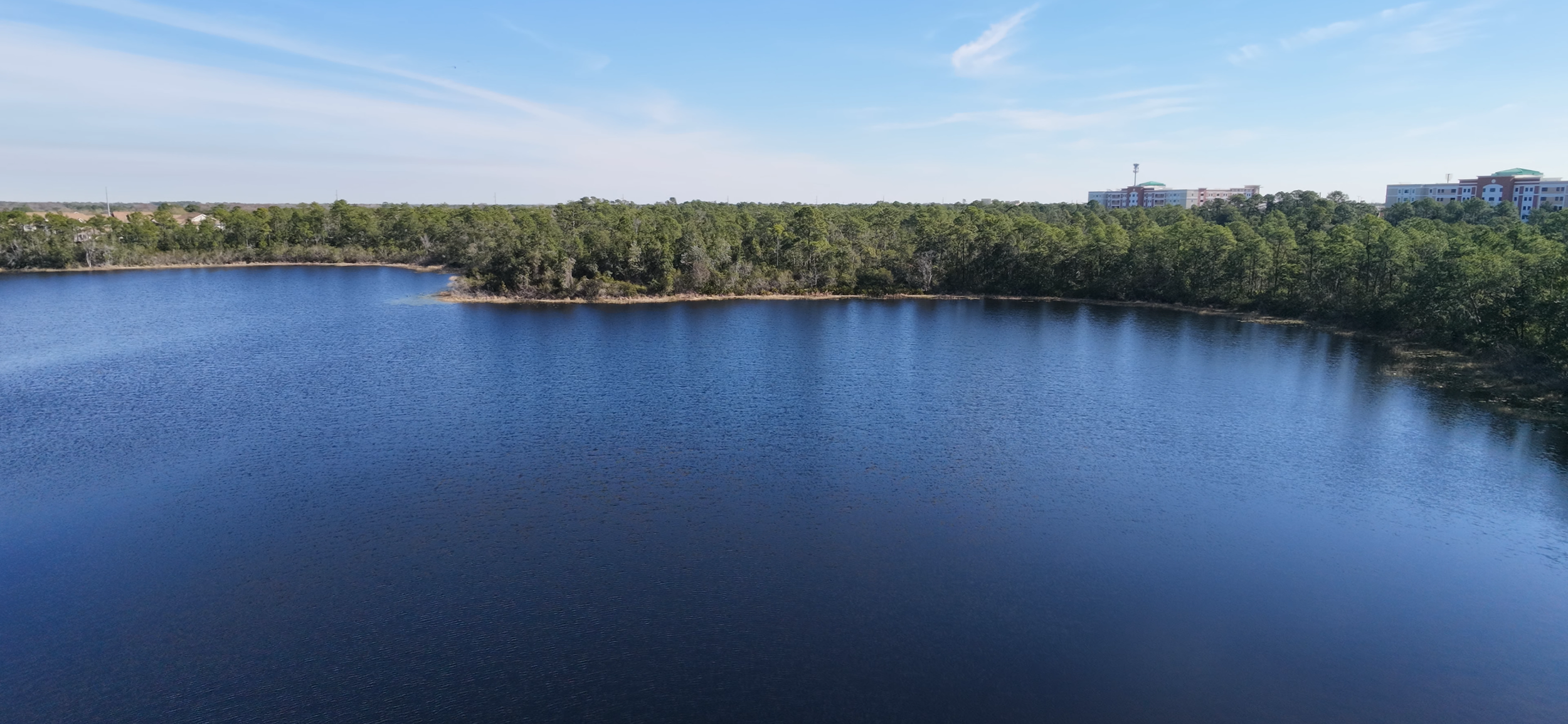
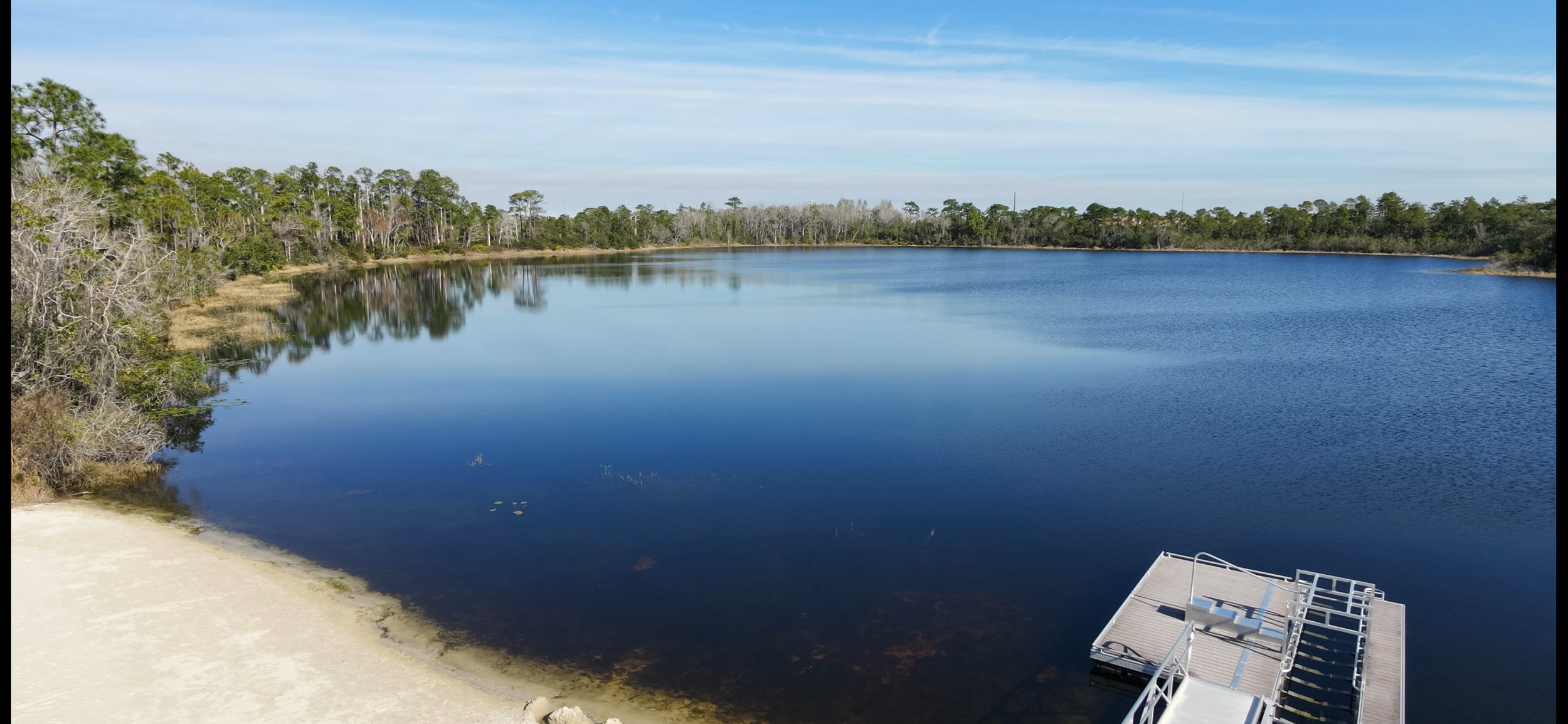
Florida is entering the second week of historic drought conditions that are expected to continue through March, spurring a wave of government action.
This issue is compounded by a United Nations declaration on Jan. 20 of a “global water bankruptcy," the idea that many regions of the world no longer have a preindustrial norm to return to. The study states we are living “beyond our hydrological means” and that our water situation currently exists in an era that is “post-crisis.”
“When water systems fail, the effects are swift and far-reaching: harvests decline, energy systems are disrupted, public health is endangered, cities become increasingly unlivable, livelihoods are lost, communities are displaced, tensions escalate, and the foundations of peace and stability are undermined,” the U.N report states.
Otis Woolfolk, senior marine biology major, works for UCF’s CEELab, an arm of the university, in which research focuses on conservation and restoration of aquatic environments. Woolfolk was familiar with the study conducted by UCF and said that previous studies he was involved in also foretold a worrisome situation.
“I don't have the background to say what is going to definitively happen to humans; this is just my opinion, not as a researcher but as a human being," Woolfolk said in a Zoom call. "This is really bad. If it messes with the animals, it is obviously going to mess with us, too.”
The Florida Forest Service also issued burn bans on Jan. 18 in 35 counties, including Orange and Osceola. The bans stem from unprecedentedly dry conditions that the state has been experiencing since the turn of the new year.
The bans followed water shortage warnings issued on Feb. 6 from the South Florida Water Management District to six counties: Collier, Glades, Highlands, Lee, Miami-Dade and Monroe. The warning was issued amid “continuing dry conditions” and “increasing water supply concerns,” according to the statement.
The U.S. drought monitoring map estimates that 98.8% of Florida exists in abnormally dry to extreme drought conditions, with 43.4% of Floridians living in extreme drought-designated areas. Orange County and UCF's main campus sit within the 13.4% of the state that experiences moderate drought conditions.
Orlando’s ability to combat the statewide water crisis comes from various water initiatives, including its Orlando wetlands and potable water policies, which date back to 1991. The wetlands in particular use “advanced treatment for reclaimed water,” and specifically, the Iron Bridge Regional Water Reclamation Facility was designed to reclaim 35 million gallons a day for the wetlands, according to Orlando's website.
Nick Coker, UCF’s Arboretum public garden management coordinator and junior biology major, works to keep much of the plant life stable during periods of instability and generally looks after the park. Coker explained how the Arboretum is able to stay unaffected by drought conditions due to its philosophy.
“We don't do any routine watering," Coker said. "The idea is that we implement all Florida native plants that should be able to withstand temperature differences, weather, drought. So my teams have not had to make any changes.”
This would solve many of the potential issues the Arboretum could face with its plants. However, the water issue is more compounding in nature.
A study published by UCF on Nov. 8, 2025, indicates that it's “raining plastics” as large amounts of microplastics are released into our water systems through atmospheric deposition.
Dr. Linda Walters directs UCF's CEELab and, along with her team, examined the Indian River Lagoon and its rates of microplastics within the water, searching to see if atmospheric deposition could account for the level of microplastics. The study's answer was a resounding yes.
Madison Serrate, employee of the UCF CEELab and master's student in biology, said that while their lab has not done any direct studies to examine the effects of microplastics on an organism’s health, it should be noted that the full effects microplastics have on our environment are yet to be fully understood.
“As far as health goes, other studies have noted that the bioaccumulation of microplastics in humans can have adverse health effects on the immune system (Prata et al., 2020)," Serrate said in an email. "There have also been studies that show ingestion of microplastics can cause copepod (small crustaceans) mortality (Takahashi and Teh 2024).”
The U.N. report warns about the dwindling nature of healthy water sources and the larger ramifications this can have on the future of not only human health but infrastructure as well.
“Across regions and levels of development, water systems are under unprecedented pressure," the report reads. "Rivers, lakes and wetlands are degrading, groundwater resources are being depleted beyond sustainable limits, and glaciers are retreating at accelerating rates. These trends signal not only growing stress, but in many contexts a structural imbalance between water demand and available resources."
Based on previous studies his lab has conducted, Woolfolk said the water crisis is not a spur-of-the-moment problem, but rather a large-scale, multifaceted issue.
"The scary thing is it's not just plastics that are coming from drain water or storm runoff, it's plastics that are in the air that are falling down everywhere,” Woolfolk said. “The amount of plastics we were seeing in the lagoon, which are smaller than 5 nanometers, we would be able to take the average size of them and go from here to the moon 1.5 times.”
Further studies conducted by the University of Florida found that Florida’s freshwater springs, which provide 90% of the state's drinking water, had 68% of the samples with 13 identifiable PFAs present across all samples. PFAs, referred to by the study as “forever chemicals,” are found in a variety of consumer and industrial products. As a result of these products, PFAs are now found in water, air, fish, and soil at locations across the nation, according to the Environmental Protection Agency.
Current research from the EPA indicates that PFAs “may lead to adverse health outcomes,” but also stresses that research in the field is still developing an understanding of exposure to PFAs over long periods of time.
“I don't have the background to say what is going to definitively happen to humans; this is just my opinion, not as a researcher but as a human being,” Woolfolk said. “This is really bad. If it messes with the animals, it is obviously going to mess with us, too.” Woolfolk said.
Gabriel Crowe, environmental activist and junior mechanical engineering major, said that over time, the water crisis only seems to grow as land becomes increasingly corporate-owned.
“We have seen some of our favorite spots sold off and taken over for development," Crowe said. “There used to be a big one on the Econ River where everyone used to hang out, rope swing, and massive treehouses [on the water] for a hangout spot. It ended up being sold off for development after 40 to 50 years.”
As reported by the Tampa Bay Times, much of the water pollution problem is due to the EPA taking a hands-off approach to limiting the amount of urban runoff produced during the development of communities. As the article points out, under the Clean Water Act, states are responsible for curbing this urban runoff, but “Florida has been slow to adhere to them.”
Brandyn Lovett, education and outreach intern with UCF’s branch of GenCLEO, an environmental advocacy and outreach group, said that the lack of adherence to in-place regulations, or electing the proper officials to handle these environmental issues, is what leads to the pollution and “gutting” of aquatic ecosystems.
Lovett said that the water crisis could be helped tremendously if people went out and voted with the understanding of the difficulties we are facing.
“We are here to get people to realize that this problem is already here,” Lovett said. “It's not coming for us, it's here, and it's just going to get worse.”
By Joseph Wiedeman